The findings revealed a decisive shift - most participants were not seeking competition — they were seeking fitness in an enjoyable format. This insight reframed sports as a sustainable pathway to health rather than an athletic pursuit.
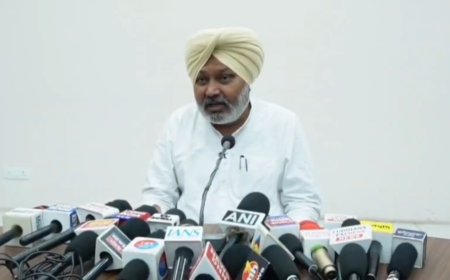
During the press interaction, journalists raised pointed questions on retention challenges, differentiation from gyms, scalability, and the role of technology.
Responding to a question on declining gym adherence, Dr. Vibhor Mishra, CEO, 3EA Global stated, “The biggest challenge in preventive healthcare is not awareness — it is continuity. Fitness today depends heavily on motivation, and motivation is temporary. Behaviour, however, is sustainable. FTS is designed as a behavioural system where participation becomes routine rather than a decision.”
He further emphasized that the platform measures consistency over intensity, focusing on habit formation rather than performance metrics.
Addressing comparisons with conventional gyms, Mr. Aman Dubey, Founder of FTS explained, “People don’t quit fitness because they don’t value health. They quit because it feels like work. Sports create engagement, accountability, and belonging. When others expect you to show up, you rarely skip.”
He clarified that FTS is not a turf aggregation platform nor a pay-per-session sports service. Instead, it operates on a structured subscription-driven participation model, where members follow recurring weekly schedules integrating sports sessions, wellness formats, and community leagues.
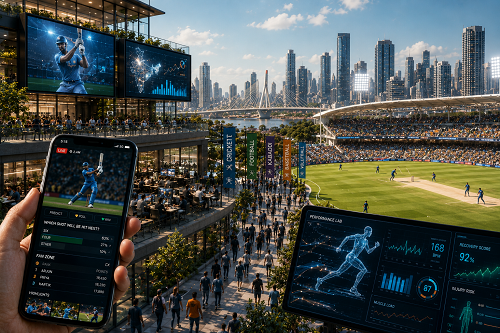
Dr. Vibhor Mishra elaborated that FTS integrates artificial intelligence to guide participation responsibly.
The application profiles users based on lifestyle patterns, body type, medical sensitivities, and fitness objectives. Individuals with cervical spine concerns or specific health conditions receive guided recommendations to ensure suitability. The system tracks habit streaks, participation frequency, and engagement rhythms rather than calorie counts or competition scores.
“We designed health to fit into lifestyle — not the other way around,” Dr. Vibhor Mishra quoted.
Speaking on the asset-light expansion model, Er. Pranav Bhaskar explained that FTS will operate through structured Facility Partner (FP) agreements across cities. Facilities can range from multi-sport environments offering cricket, football, badminton, and pickleball to specialized single-format centres.
Through a unified application, members can access sessions across partner facilities within their city.
“Future wellness businesses will be defined by engagement models, not equipment. Retention is behavioural, not infrastructural,” Er. Pranav Bhaskar said.
He emphasized that the distributed partnership model allows rapid scaling while maintaining centralised behavioural governance.
When asked why operations would begin in Lucknow instead of a metro city, Mr. Aman Dubey clarified, “We chose Lucknow intentionally. It represents aspirational India with realistic lifestyle patterns. Before scaling nationally, we want to validate behavioural adoption in an authentic environment.”
The first centre will function as a structured habit-formation laboratory, measuring participation adherence and community engagement before metro expansion.
FTS – Fitness Through Sports aims to address broader concerns such as sedentary work culture, stress, lifestyle diseases, and declining community interaction. By embedding structured sports into routine schedules across age groups — youth, working professionals, mid-age individuals, and senior citizens — the platform aspires to create measurable public health and socio-economic impact.
Rather than positioning itself as a gym alternative, FTS positions itself as a behavioural shift.
Traditional fitness formats demand discipline.
FTS embeds fitness within enjoyment.
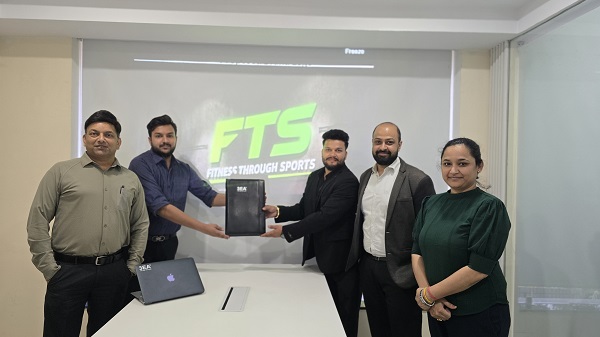
As the media interaction concluded, representatives reiterated that FTS – Fitness Through Sports is not merely a single-location venture but a scalable national ecosystem designed to transform how India experiences movement.